
Only when the machining equipment is combined with high-performance tools is their rightful efficiency fully utilized, and good economic benefits realized. With the rapid advancement in tool materials, various new forms of tool materials have greatly improved in their physical, mechanical, and cutting aspects, and their operating range is also continuously widening.

What is the Classification of Tools?
CNC tools is a general term of various kinds of tools in combination with CNC machine tools (such as machining centers, CNC lathes, CNC boring and milling machines, etc.), and are the primary supporting products of CNC machine tools. CNC tools have developed with overseas rapid growth, rich in variety and have formed a series. In China, due to the lagging research and development of CNC tools, it has become the weakest link in tool industry, which has a serious effect on the overall performance of domestic and foreign CNC machine tools.
CNC tools should be suitable for the characteristics of high speed, high efficiency, and high automation of CNC machine tools. They basically include the tool itself and the attaching tool holder, and the tool holder is becoming more and more standardized and serialized. In recent years, CNC machining technology developed rapidly, which has driven the innovation of CNC tools. Innovation of new types of CNC tools can drive CNC machining technology to a new level and bring immense economic and social returns.
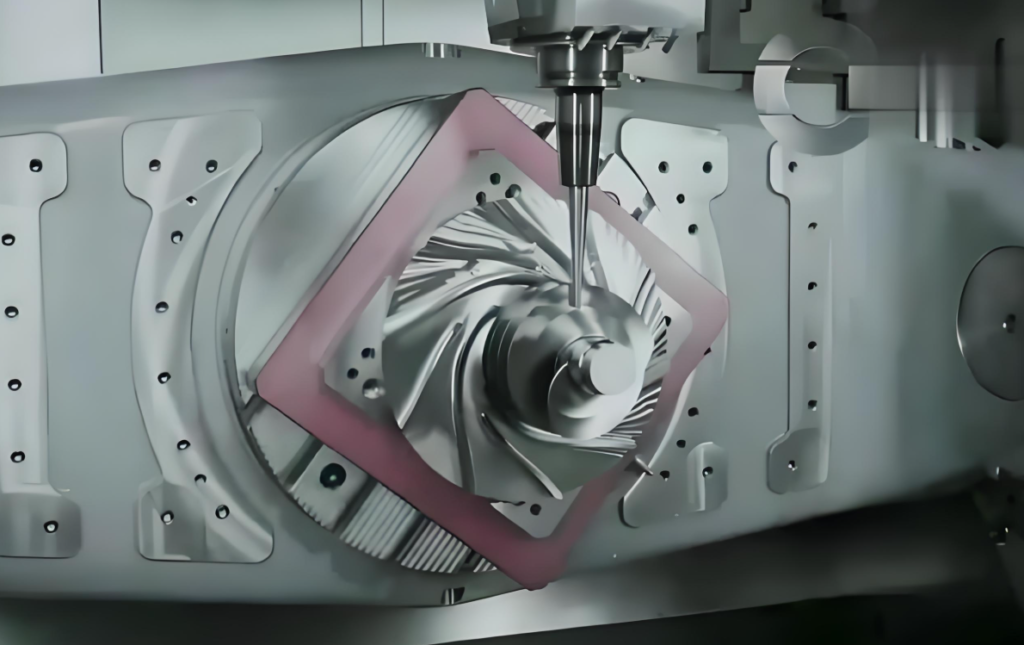
Introduction to Common Tools
Lathe Tools
Lathe tools are one of the most prevalent tools used in metal cutting machining. Lathe tools can be used on a lathe to turn external circles, end faces, threads, internal holes, and can also be used for grooving and cutting off. According to structure, lathe tools can be divided into integral lathe tools, welded and assembled lathe tools, and lathe tools with mechanically clamped inserts. Lathe tools with mechanically clamped inserts can be divided into machine lathe tools and indexable lathe tools. The cutting performance of mechanically clamped lathe tools is stable, and workers do not need to sharpen the tools, thus they are extensively used in modern production.
Hole Machining Tools
Hole machining tools can be generally divided into two types:
One kind is machining tools for new holes in workpieces from solid material, and the typical examples are twist drills, center drills, and deep hole drills, etc.;
Another kind is re-machining tools for existing holes in workpieces, and the typical ones are reamers, boring tools, etc.
Milling Cutters
Milling cutters are multi-edge rotary cutting tools, and they are very widely used, with many different types. According to their uses, they can be divided into:
1.Those applied in machining planes, such as cylindrical plane milling cutters, end mills, etc.;
2.Those applied in machining grooves, such as end mills, T-slot cutters, and angle milling cutters, etc.;
3.Those applied in machining formed surfaces such as convex and concave half-round milling cutters and other complex formed surface milling cutters. Milling possesses a relatively high productivity overall, but the value of surface roughness of the machined surface is rather large.
Broaching Tools
Multi-toothed tools with relatively high machining accuracy and cutting efficiency and are widely used in mass production to machine inner and outer surfaces. According to the diverse surfaces of machined workpieces, broaching tools can be divided into several internal broaching tools and external broaching tools. When approaching the use of tools in machining, aside from determining the rake angle and clearance angle of the cutting teeth in relation to the material of the workpiece and determining the size of the broaching tool based on the machined surface size of the workpiece (for instance, the diameter of the circular hole), there are two additional parameters to select:
(1) Tooth rise angle af [i.e., radius or height difference between two successive cutting teeth (or sets of teeth)];
(2) Tooth pitch p [i.e., axial distance between two successive cutting teeth].
Threading Tools
Threads can be cut by the cutting method and the rolling method.
Gear Cutting Tools
Gear cutting tools are those used for cutting tooth profiles of gears. As specified by the cutting principle of tools, gears can be divided into form gear cutting tools and generating gear cutting tools. Disc gear milling cutters and finger gear cutting tools, etc., can be used usually as form gear cutting tools. Gear shaper cutters, gear hobs, and gear shaving cutters, etc., can be used usually as generating gear cutting tools. When gear hobs and gear shaper cutters are selected, the following should be considered:
(1) The fundamental parameters of the tool (module, tooth profile angle, gear profile, addendum coefficient, etc.) should be equal to the fundamental parameters of the gear being machined.
(2) The accuracy grade of the tool must be equal to the accuracy grade that the gear being machined requires.
(3) The tool helix direction should also be the same as that of the machined gear as closely as possible. Left-hand tooth tools are most commonly used in hobbing of spur gears.
Tools for Automatic Production Lines and CNC Machine Tools
By and large, the cutting parts of these tools are not much different from common tools in other situations. The only difference is that in the course of keeping pace with the nature of machining on CNC machine tools and automatic production lines, more demands are made on them.
Three basic systems of CNC tools have been set up: the turning tool system, the drilling tool system, and the boring and milling tool system.
Basic Properties that Tool Materials Should Possess
efficiency, machining quality, and machining cost. Tools, when cutting, need to withstand high pressure, high temperature, friction, impact, and vibration. Tool materials should therefore exhibit the following fundamental properties.
(1) Hardness and Wear Resistance: Tool material hardness must be higher than the hardness of the workpiece material, ideally higher than 60HRC. The harder the tool material is, the higher its wear resistance.
(2) Strength and Toughness: Tool material must be high in strength and toughness to withstand cutting forces, shocks, and vibrations and prevent brittle fracture and tool chipping.
(3) Heat Resistance: The heat resistance of the tool material must be good, it should have the ability to withstand high temperatures during cutting and should have excellent oxidation resistance.
(4) Processability and Economy: The tool material should have satisfactory forging performance, heat treatment performance, welding performance, grinding performance, etc., and should attempt to obtain a high performance-price ratio.
Definition and Classification of CNC Tools
CNC tools mainly play the role of cutting and machining on CNC machine tools and are one of the basic components in the entire process of CNC machining. As a significant consumable in today’s mechanical manufacturing industry, CNC tools not only include the insert part directly engaged in cutting but also necessary accessories such as tool shanks and tool holders. These components are specifically designed to combine in order to provide the precise cutting of workpiece materials to meet different machining requirements. CNC tool and CNC machine tool are, by definition, two major links in the overall process facilities for cutting machining.
CNC tools are specifically categorized into several types based on diverse classification standards, which include:
(1) Classification by Use
① Turning Tools: Sub-classified as external turning tools, internal turning tools, threading tools, and grooving tools, etc.
② Milling Tools: Cylindrical plane milling cutters and end mills; end mills can be used both for side milling and contour machining; die-sinking end mills are specifically designed for turning intricate die cavities.
③ Drilling Tools: They are mainly used for operations such as drilling, reaming, and counterboring holes in workpieces.
④ Boring Tools: They are referred to as rough boring tools and finish boring tools to address the machining needs of hole systems with different precision levels.
⑤ Gear Cutting Tools: Special gears for making and machining gears, mainly used to machine the tooth parts of different cylindrical gears, bevel gears, and other toothed workpieces.
⑥ Special Tools: For example, PCB (Printed Circuit Board) tools are special tools used for machining printed circuit boards.
(2) Classification by Material
① High-Speed Steel Tools: They are easy to sharpen and have good toughness but are not good for high-speed and high-intensity cutting conditions.
② Cemented Carbide Tools: They are very hard with very high wear resistance. They are also used for cutting the above difficult-to-machine materials like stainless steel, high-manganese steel, alloy cast iron, and titanium alloy, etc.
③ Ceramic Tools: Their hardness is very high, higher than that of cemented carbides, and very well wear resisting as well as heat resisting. They are used to perform the finishing or semifinish machining on comparitively harder materials.
④ Diamond Tools: They can be divided into natural single-crystal diamond tools, artificial polycrystalline diamond tools, and diamond sintered body tools. They are very hard and wear-resistant and can cut ultra-thin, and thus they are one of the most appropriate tools for ultra-precision machining. Nowadays, they are used mainly for fine cutting of non-ferrous metal and non-metallic materials and cannot be used for machining ferrous metals.
⑤ Cubic Boron Nitride (CBN) Tools: Two types: integral polycrystalline cubic boron nitride tools and cubic boron nitride composite inserts. Their hardness and wear resistance are second only to diamonds, and they can perform rough machining and semi-finish machining on extremely hard materials such as chilled steel and chilled cast iron.
(3) Classification by Structure
① Integral Tools: The entire tool set is built from a single blank, with an uncomplicated design and sufficient rigidity. They are frequently used in miniature tools or where there is a requirement for high overall tool performance.
② Inserted Tools: They use welding or mechanical clamping joints. The mechanical clamping type is further divided into non-indexable and indexable types.
③ Special-Structure Tools: They include composite tools, vibration-damping tools, etc. Composite tools combine multiple cutting functions and can complete multiple processes in one clamping; vibration-damping tools are specially made to solve the issue of vibration during machining of long overhanging tools. Their internal structure uses special damping materials to ensure the stability of the tool in high-speed cutting and is widely used in machining thin-walled parts in the aerospace field.
Structure
The structure of various tools consists of a clamping part and a working part. In integral structure tools, the working part and the clamping part are manufactured on the tool body; in tooth-inserted structure tools, the working part (cutting teeth or inserts) is mounted on the tool body.
The clamping elements of tools are divided into two types: those with holes and those with shanks. Tools with holes are sleeved on the spindle or mandrel of the machine tool through the inner hole, and the torsional moment is transmitted by means of an axial key or a face key, e.g., cylindrical milling cutters and shell end mills.
Tools with shanks usually have three types of shanks: rectangular shanks, cylindrical shanks, and conical shanks. Lathe tools, planer tools, etc., tend to have rectangular shanks; conical shanks provide support to axial thrust due to the taper and transmit torque through friction; cylindrical shanks tend to be suitable for small twist drills, end mills, and other tools, and the torsional moment is transmitted through the developed friction at the time of clamping at the time of cutting. The shanks of the majority of shank tools are made of low-alloy steel, and the working part is made by butt-welding the two parts with high-speed steel.
The working part of a tool is the part that creates and forms chips, including the cutting edge, the chip-breaking or curling mechanism, the chip-discharging or chip-storing area, the cutting fluid passages, and other structural elements. For some tools, the functional part is the cutting part, for example, lathe tools, planer tools, boring tools, and milling cutters; for some tools, the functional part includes both the cutting part and the calibration part, for example, drills, reamers, internal broaching tools, and taps. The function of the cutting section is to take chips away with the cutting edge, and the function of the calibration section is to finish the cut of the machined surface and guide the tool.
The structure of the tool’s working section has three structures: integral structure, welded structure, and mechanical clamped structure:
■ The integral structure is to shape the cutting edge on the tool body;
■ The welded structure is to braze the insert on the steel tool body;
■ The mechanically clamped structure also has two types. One is to clamp the insert on the tool body, and the other is to clamp the brazed tool head on the tool body.
Cemented carbide tools are generally processed into welded structures or mechanically clamped structures; ceramic tools all employ mechanically clamped structures.
The geometric parameters of the cutting part of the tool have a significant influence on the cutting efficiency and machining quality. Increasing the rake angle can reduce the plastic deformation upon the compression of the cutting layer by the rake face, reduce the friction resistance for chips moving through the rake face, and thereby reduce the cutting force and cutting heat. But this will also reduce the cutting edge strength and reduce the heat dissipation volume of the tool head.
In the process of tool angle selection, the influence of various factors should be considered, such as the material of the workpiece, the material of the tool, the nature of the machining (rough machining or finish machining), etc., and a reasonable selection should be made according to the actual case. The indicated angles of production and measurement normally mentioned are for the tool angles. Under actual working, because of differences in the tool installation positions and reversing of the cutting direction of movement, the actual angle of operation does not coincide with the indicated angle but usually the difference is really negligible.
KESU’s Tool Machining Service
KESU’s tool machining service serves different kinds of tools with diverse machining needs. KESU’s service selects suitable tools, combines advanced equipment, and capitalizes on the properties of tool materials to provide customers with precise and efficient machining services, which allows different industries to enhance efficiency in production.
Conclusion
With the application of new technologies such as high-rigidity integral casting machine tool beds, high-speed operation CNC systems, and new tool materials, modern cutting machining is developing towards high speed, high precision, and high-power cutting, which is quite different from traditional cutting. “CNC tools” are the integral alloy tools, super-hard tools, indexable inserts, etc. used in combination with sophisticated CNC machine tools like machining centers and CNC lathes, and they possess a critical distinction from conventional tools.


