

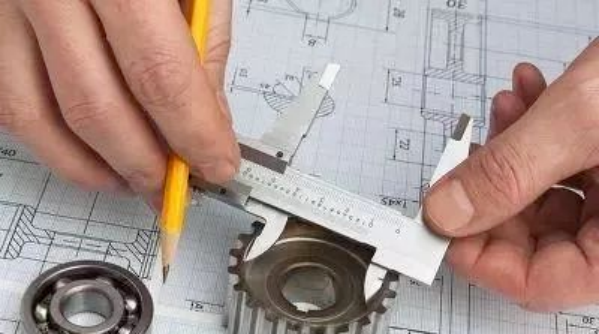
In the world of modern manufacturing, the relationship between the correct values reflected on engineering drawings and precision-driven CNC (Computer Numerical Control) machining technology is of extreme importance. Engineering drawings are the master blueprint for any production project, and correct numerical values on them determine the exact dimensions, tolerances, and geometric features of the final product. CNC machining, on the other hand, is the means to translate these conceptual values into actual, correctly manufactured parts.
Introduction to Machining Accuracy
Machining accuracy is mostly used to measure the degree of production of commodities. Machining accuracy and machining error are terms used to determine the geometric parameter of the machined surface. Machining accuracy is measured in terms of tolerance grades. The smaller the grade value, the higher the accuracy. Machining error is denoted by a numerical value. The larger the numerical value, the larger the error. Low machining error signifies high machining accuracy, and vice versa.
There are 20 tolerance levels ranging from IT01, IT0, IT1, IT2, IT3 to IT18. IT01 is the highest machining accuracy of the part, and IT18 is the lowest machining accuracy of the part. Typically, IT7 and IT8 are medium machining accuracy.
The real parameters obtained by any machining method will never be absolutely exact. From the aspect of the part function, assuming the machining error is within a tolerance needed in the drawing of the part, the machining accuracy is considered to be insured.
| serial number | Tolerance Zone Shape Names | Forms | Practical Examples |
| 1 | Two parallel lines | 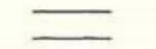 | Straightness of a line in a given plane |
| 2 | Two equidistant curves |  | Profile of a line |
| 3 | Two concentric circles |  | Roundness |
| 4 | A circle |  | Positional tolerance of a point in a plane |
| 5 | A sphere |  | Positional tolerance of a point in space |
| 6 | A cylinder |  | Straightness and perpendicularity of an axis |
| 7 | A quadrangular prism |  | Positional tolerance of an axis in two given directions |
| 8 | Two co-axial cylinders |  | Cylindricity |
| 9 | Two parallel planes |  | Flatness of a surface |
| 10 | Two equidistant surfaces |  | Profile of a surface |
The Difference between Accuracy and Precision
- Accuracy
- It is the closeness of the result obtained from the measurement to the true value. High precision of the measurement implies that the systematic error is minimal. At this point, the mean of the measurement data is less deviated from the true value, but the variation of the data, i.e., the size of the accidental error, is not known.
- Precision
- It is the reproducibility and consistency of the repeated measurements using the same spare samples. One can possess high precision but inaccurate accuracy. For example, when one is measuring 1mm in length, the three measurements are 1.051mm, 1.053mm, and 1.052mm respectively. Although their precision is high, they are not accurate.
Precision is the repeatability and reproducibility of the measurement result, and accuracy is the correctness of the measurement result. Precision is a necessary condition for accuracy.
What is the Precision of Machining?
Accuracy of machining refers to how close the measured value is to a specified value or the true value. When the measured value is close to the true value, the measurement is accurate. It may be used to indicate the effect of systematic errors. When the systematic error is minimal, the accuracy is high, whereas when the systematic error is significant, the accuracy is low.
Generally, scientists and product designers use accuracy to define how much one measurement is near to its target or actual value. One can illustrate accuracy and precision using an example of a bullseye target. High accuracy illustrates how close any measured value is to the center of the bullseye. Being highly close to the target value indicates high accuracy, and being highly away from the target value indicates low accuracy.
Moreover, any value close to the actual value or the allowable value, if on either side, below, or above the middle point, is considered to be accurate. Approaching the actual value is the most important feature of accuracy.
How to Improve Machining Precision and Accuracy
01 Optimize Cutting Parameters
Setting cutting parameters such as cutting speed, cutting depth, and feed rate enables getting the best machining results. It also reduces wear on tools and gives better accuracy of machining.
02 Use High-precision Machine Tools
High-precision machine tools help in getting precise control of cutting parameters. Accordingly, the processed parts can be produced just like specified by target values marked on technical drawings.
03 Tool Selection
Cut raw material with good-quality tools. To sustain high accuracy, never use second-hand or utilized tools. Appropriate tool geometry and coating to be utilized in a specific machining process guarantee that the machined parts are precisely and accurately within the tolerable limit.
04 Workpiece Clamping
Operators typically utilize workpiece clamping devices or CNC fixtures to effectively hold the workpiece in place during machining to reduce vibration and movement. These precise fixtures and clamping devices can result in precision machined components.
05 Calibration and Maintenance
Daily maintenance and calibration of CNC machine tools play a critical role in maintaining machining precision. Check the machine tools regularly to ensure that the parts are well aligned and lubricated, and check the parts for wear.
06 Measurement and Inspection
Use standard precision measuring tools, including calipers, micrometers, and coordinate measuring machines (CMMs), to conduct strict inspection processes to ensure the dimensions and tolerances while manufacturing parts.
Factors Affecting Machining Precision
Machining Principle Error
Machining principle error is the error that arises when an approximate cutting edge profile or an approximate transmission relationship is used in machining. Machining principle errors are often seen in machining threads, gears, and complex curved surfaces.
For example, to make it easy to manufacture the hob, in the case of the gear hob used to produce involute gears, the straight profile basic worm or the Archimedes basic worm is utilized to replace the involute basic worm, thus causing a fault in the involute tooth shape of the gear. Another example is in the case of change from a module worm, since the pitch of the worm is equal to the circular pitch of the worm gear (i.e., mπ), with m being the module and π being an irrational number. But change gears’ teeth count on the lathe has a definite limit. In selecting the change gears, π must be approximated to a fraction value (π = 3.1415) for calculation. This will result in inaccuracy of the forming motion (helical motion) of the tool relative to the workpiece, resulting in pitch error.
Approximate Machining
Approximate machining is generally adopted in machining. Assuming that the theoretical error can meet the machining accuracy requirement (≤ 10%-15% of the dimensional tolerance), the productivity and economy can be improved.
Adjustment Error
Machine tool adjustment error is the error due to improper adjustment.
Machine Tool Error
Machine tool error refers to the manufacturing error, installation error, and wear of the machine tool. It is mainly made up of the guide error of the machine tool guide rail, the rotation error of the machine tool spindle, and the transmission error of the machine tool transmission chain.
Measurement Methods
According to different machining precision contents and precision requirements, different measurement methods are adopted. There are mainly the following types of methods in general:
- Accord to whether the measured parameter is directly measured, it can be divided into direct measurement and indirect measurement.
Direct Measurement : Measure the measured parameter directly in order to obtain the measured dimension. For example, measure with a caliper or comparator.
Indirect Measurement : Measure the geometric parameters with respect to the measured dimension and compute in order to obtain the measured dimension.
Obviously, direct measurement is more intuitive and indirect measurement is less convenient. Generally, whenever the measured dimension or direct measurement can not reach the precision, indirect measurement has to be used.
- It can be divided into absolute measurement and relative measurement based on whether the read value of the instrument and measuring tool directly shows the value of the measured dimension.
Absolute Measurement: The reading value is the direct representation of the magnitude of the measured dimension, e.g., measurement using a vernier caliper.
Relative Measurement: The reading value is just the representation of the difference between the measured dimension and the standard quantity. For example, while measuring the diameter of a shaft with the help of a comparator, one first needs to adjust the zero position of the instrument using a gauge block and then take the measurement. The measured value is the difference between the size of the measured shaft and the gauge block. This is relative measurement. Generally speaking, the precision of relative measurement is higher, but the measurement is more inconvenient.
- Dependent on whether or not the measuring head of the measuring tool and instrument contacts the measured surface, it is contact measurement and non-contact measurement.
Contact Measurement: The measuring head is in contact with the surface to be measured, and there is a measurement force with mechanical action. For example, measure an article using a micrometer.
Non-contact Measurement: The measuring head will not be in contact with the surface of the measured article. Non-contact measurement can avoid the interference of the measurement force on the measurement value. For example, measurement by projection method, light wave interference method, etc.
- Dependent on the number of parameters measured at the same time, it is divided into single-item measurement and comprehensive measurement.
Single-item Measurement: Measure each parameter of the measured part separately.
Comprehensive Measurement: Assess the all-around index of the concerned parameters of the part. When assessing a thread with a tool microscope, the actual pitch diameter of the thread, the half-angle error of the tooth profile, and the cumulative pitch error can be assessed respectively.
Comprehensive measurement is more time-saving and reliable to ensure interchangeability of the parts. Comprehensive measurement is employed for inspection of finished parts. Single-item measurement can define the error in each parameter separately and is employed predominantly for process analysis, process inspection, and measurement of specified parameters.
- Depending on the role played by the measurement in machining, it is categorized into active measurement and passive measurement.
- Active Measurement: Measurement is taken at the same time as the process of workpiece machining, and its outcome is utilized directly to control the machining process of the part, so that generation of waste products is prevented at the right moment.
- Passive Measurement: Measurement is conducted after the workpiece has been machined. This measurement can only determine whether the machined part is qualified and can only identify and eliminate waste products.
- Based on the condition of the part being measured during measurement, it is divided into static measurement and dynamic measurement.
- Static Measurement: The measurement is relatively static. For example, measure diameter using a micrometer.
- Dynamic Measurement: Measured surface and measuring head move relatively in a simulated state of work in the process of measurement.
- The dynamic measurement method can get close to the part’s state to the usage state and is the developmental direction of the measurement technology.
KESU: The Precision of CNC Parts
In CNC machining, accurate parts are costly. It requires advanced processes, specialized tools, and long processing time with precise tolerances, taking the cost to the sky.
But the technical personnel of KESU are experienced. Under the condition of strict precision requirements, they can very well create precise machining processes, utilize high-tech machinery, and avoid positioning errors. For example, during the manufacturing of key parts of medical equipment, they can complete work extremely well even under the condition of ±0.005mm tolerance.
From the perspective of cost management, KESU avoids wasting time by well-planning the production, makes wise tool decisions and manages their service life in order to avoid tool wear to the maximum, and also maximizes material purchase and usage. If you are focusing on precision or cost, KESU can customize the solutions to ensure maximum precision as well as cost-effectiveness and hence appropriate for your CNC machining.
Conclusion
Machining accuracy is the degree of correspondence between the actual dimensions, shapes, and positions of the machined surface of a part and the ideal geometric parameters required in the drawing. For dimensions, the ideal geometric parameter is the mean dimension. For the geometric shape of the surface, it is an absolute circle, cylinder, plane, cone, and straight line, etc. For the relative positions of surfaces, it is absolute parallelism, perpendicularity, coaxiality, symmetry, etc. The difference value of the actual geometric parameters of the part and the ideal geometric parameters is called the machining error.


