

Aluminum alloys are increasingly used in most industries due to their outstanding properties, features and unique qualities in the processing industry. With the rapid development of the industrial economy, the need for welded structural components of aluminum alloy rises day by day, which is driving an in-depth exploration of the weldability of aluminum alloys.
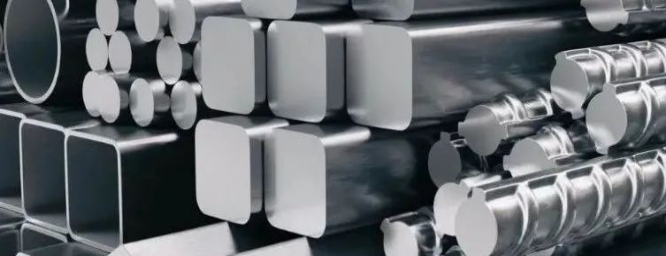
What is an Aluminum Alloy?
Aluminum alloy is a kind of lightweight alloy. It is low in density, but with relatively high tensile strength. At the same time, strengthening techniques such as heat treatment and aging strengthening can be adopted to improve its hardness and strength. Aluminum alloys are easy to be forged into castings and forgings, and widely used in aerospace vehicles, instruments, electrical appliances, chemical products and other fields.
Characteristics of Aluminum Materials
Aluminum and aluminum alloys find widespread use in industrial applications due to their unique physical and chemical properties.
High Strength
Aluminum can be alloyed with other elements to enhance its strength. For example, the 7000 series alloys, which are heat-treated following zinc and magnesium addition, have extremely high strength. The conventional A7075 (super duralumin) is also utilized in aircraft components.
Corrosion Resistance
Aluminum readily reacts with oxygen and creates a very dense oxide film on its surface. The film is able to effectively protect the interior of the aluminum material from reacting with the exterior world, thus providing it with very good corrosion resistance and enabling it to be used in many hostile environments.
Plasticity and Machinability
Aluminum materials possess good plasticity and machinability. They can be formed into different shapes by means of extrusion, stretching, and stamping. They possess strong adaptability, which makes production and assembly more convenient.
Thermal and Electrical Conductivity
The thermal conductivity of aluminum is around three times that of iron. It is commonly used in car radiators, heat exchangers of various shapes, and heat sinks of electronic devices, etc. Aluminum possesses twice the electrical conductivity of copper of the same weight and is also less heavy. Its use as a transmission material can enable the center-to-center spacing between pylons to be increased and thus can assist in reducing the cost of construction.
Lightweight
Aluminum has a density of approximately 2.7 g/cm³, roughly a third of the density of steel. As a result, aluminum products become highly applicable for application where lighter weight is a priority, like in transport and aerospace.
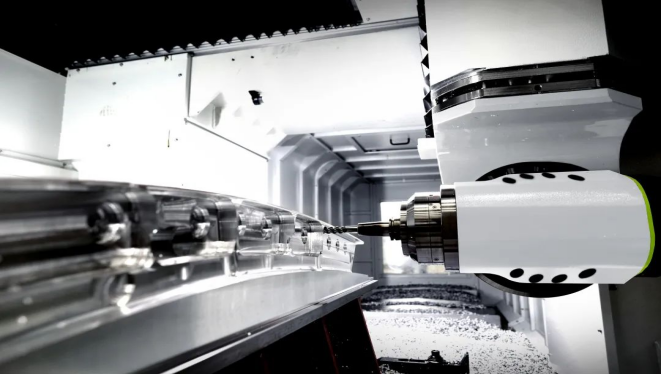
Material Characteristics
The alloys of aluminum have low weight density but relatively high strength, approaching or even exceeding that of high-quality steel. They are plastic and can be machined into various profiles. They are excellent in electric and heat conductivity and in corrosion protection. They are widely used in industry, and their quantity of use is second only to that of steel.
Aluminum alloys can be divided into two main categories according to the processing process: wrought aluminum alloys and cast aluminum alloys.
Wrought aluminum alloys are resistible to pressure processing, and they can be processed into aluminum alloy materials of numerous shapes and specifications. Wrought aluminum alloys are mainly applied to the production of aerospace equipment, door and window assembly, etc. Wrought aluminum alloys are divided into non-heat-treatable-strengthening aluminum alloys and heat-treatable-strengthening aluminum alloys. Non-heat-treatable-strengthening aluminum alloys cannot have their mechanical properties improved through heat treatment, and can only be strengthened through cold working deformation. They are mainly made up of high-purity aluminum, industrial high-purity aluminum, industrial pure aluminum, and anti-rust aluminum, etc. Heat-treatable-strengthening aluminum alloys can have their mechanical properties improved through heat treatment techniques such as quenching and aging. They can be categorized into duralumin, forged aluminum, super duralumin, and special aluminum alloys, etc.
Cast aluminum alloys can be classified according to their chemical composition into aluminum-silicon alloys, aluminum-copper alloys, aluminum-magnesium alloys, aluminum-zinc alloys, and aluminum-rare earth alloys. Of these, aluminum-silicon alloys can be further divided into hypereutectic silicon aluminum alloys, eutectic silicon aluminum alloys, and single eutectic silicon aluminum alloys. Cast aluminum alloys are used in the as-cast state.
Some aluminum alloys can acquire excellent physical properties, corrosion resistance, and mechanical properties through heat treatment.
Attributes of Aluminum Alloys
Aluminum alloys possess numerous excellent characteristics. Some of the main features are as follows :
Low Density:
The density of aluminum alloys generally ranges from 2.5 to 2.88 g/cm³, which is much lower than that of many common metals, such as iron (with a density of approximately 7.86 g/cm³) and copper (with a density of approximately 8.96 g/cm³). This makes them lightweight and gives them obvious advantages in applications where weight is a concern, such as in the aerospace and automotive manufacturing industries.
High Specific Strength:
By adding alloying elements (such as magnesium, silicon, copper, etc.) reasonably and carrying out appropriate heat treatment, the aluminum alloys can attain relatively high strength. Their specific strength (i.e., the ratio of strength to density) is much greater than that of the ordinary steel materials. They can effectively minimize the structural weight while ensuring the structural strength.
Good Corrosion Resistance:
Aluminum is readily able to react with oxygen in the atmosphere to form a dense aluminum oxide layer on the surface. This oxide layer can protect the inner aluminum from further oxidation, and aluminum alloys have good corrosion resistance. In particular, some of the more corrosion-resistant aluminum alloy series, such as 5000 series aluminum alloys, can sustain good corrosion resistance even under severe conditions like a marine environment.
Easy Machinability:
Aluminum alloys have good plasticity and machinability and are aptly exposed to various processing and forming procedures such as casting, forging, extruding, and machining. Aluminum alloys can be easily shaped into various complex forms through molds, and the energy being utilized in processing is relatively low, leading to higher processing efficiency.
Good Thermal and Electrical Conductivity:
Aluminum alloys exhibit fairly good electrical and heat conductivity. Their coefficient of thermal conductivity is generally between 100 and 250 W/(m·K), and their electrical conductivity is second amongst a few metals such as copper and silver. Aluminum alloys are hence often used to produce products which require good electrical or heat conductivity, i.e., radiators and electric wires and cables.
Recyclability:
Aluminum alloys have good recycling value. The energy consumption of recycling and reuse is only 5% of that of the manufacturing of primary aluminum, and the performance loss of recycled aluminum alloys is comparatively small. They can be recycled many times, which meets the requirements of environmental protection and sustainable development.
Good Surface Treatment Performance:
The surface of aluminum alloys can be treated by various surface treatment methods such as anodizing, electroplating, electroless plating, and spraying to obtain various appearance effects and properties, such as improving corrosion resistance, wear resistance, and decorativeness, etc., for the needs of various application conditions.
Six Technological Properties of Aluminum Alloy Casting
The technological characteristics of the casting of aluminum alloys consist of numerous key features and are the integral characteristics that occur at the mold filling, crystallization, and cooling stages. They mostly include fluidity, shrinkage, tightness, casting stress, and gas absorption. All of these properties are not only created by the chemical makeup of the alloy itself but also by many external factors, including the casting conditions, the heating extent of the alloy, the complexity of the mold, the gating and riser system, and gate shape, etc.
Fluidity
Fluidity is related to the ability of alloy liquid to pour into the mold, and it directly affects whether complex castings can be cast. Among them, eutectic alloys have the highest fluidity. Fluidity’s impact is complex. Internally, they are composition, temperature, and solid particles such as metal oxides and compounds in alloy liquid; externally, pouring temperature and pouring pressure are the most significant factors. In actual production, after the alloy is selected, apart from strengthening smelting, the process of mold also needs to be optimized. Pouring temperature should be increased without compromising the quality of the casting so that fluidity of the alloy can be preserved.
Shrinkage
Shrinkage is an excellent characteristic of cast aluminum alloys. From pouring to solidification and then cooling to room temperature, the alloy experiences three processes of liquid, solidification, and solid shrinkage, which significantly influence the shrinkage cavity, stress, crack, and dimension change of the casting. Shrinkage is divided into volumetric shrinkage and linear shrinkage, and linear shrinkage is widely used to quantify it in production. Volume shrinkage includes solidification and liquid shrinkage and will create porosity and shrinkage cavities and is a function of the solidification range. Sequential solidification must be followed, and chills and risers are used for control. Linear shrinkage affects the quality of casting, and shrinkage rate for different alloys and castings varies.
Hot Cracking Tendency
The hot cracks in aluminum casting are caused by the overpassing of the metal grain bonding strength and the shrinkage stress, and they preferentially develop along grain boundaries. The broken metal prefers to be oxidized. Different aluminum alloys possess different tendencies to form cracks, which are constrained by conditions such as the mold resistance and solidification temperature difference. In production, a yielding mold can be used, or the gating system can be optimized to prevent hot cracks. The hot crack ring method is also frequently used in the detection of hot cracks.
Airtightness
Cast aluminum alloys’ tightness refers to tightness and cleanness of internal structure of casting, and they are related to the nature of the alloy as well as casting process. Those alloys having low solidification range, low porosity, and less air bubble have good tightness. It can be increased by reducing pouring temperature, positioning chills, or through application of impregnation process.
Casting Stress
Cast stress includes thermal stress, phase transition stress, and shrinkage stress. Thermal stress is caused by the uneven thickness of the casting part and asynchronous cooling; phase change stress is caused by phase transition and volume transition of the aluminum alloy during cooling after solidification; shrinkage stress is caused by the constriction of the casting shrinkage and can lead to hot cracks. Residual stress will decrease the mechanical properties of the alloy, and it can be removed by annealing. Proper design of the structure of the casting can minimize the stress.
Gas Absorption
Aluminum alloys tend to trap gases, and this is one of the important characteristics of cast aluminum alloys. The reason behind this is that the components of liquid aluminum and aluminum alloys react with the furnace charge, organic material combustion residues, and the water in the mold, and the hydrogen produced gets trapped by the aluminum liquid.
The temperature of the aluminum alloy melt has a close relationship with the solubility of hydrogen. The higher the temperature, the greater the absorption of hydrogen. At 700°C, the solubility of hydrogen in each 100g of aluminum is 0.5-0.9. At 850°C, the solubility of hydrogen is 2-3 times greater, and when there are alkali metal impurities, the solubility of hydrogen is greatly increased.
Cast aluminum alloys will take up gases both while smelting and while pouring into the mold. When the molten metal flows into the mold, the metal solidifies and the gas solubility lowers. The excess gas precipitates and part of the gas that could not be expelled creates “pinholes” in the casting and sometimes gets incorporated with the shrinkage cavity.
Aluminum casting pinholes are very harmful. They will reduce the airtightness, corrosion resistance, and mechanical properties of the alloy of the casting. The higher the hydrogen content of the cast aluminum alloy liquid, the more pinholes there will be. In order to obtain aluminum castings with fewer or no air holes, the key is in the smelting process. Usage of covering agent during smelting reduces the gas absorption, and also purification of melt aluminum can easily control the amount of hydrogen.
Applications of Aluminum Materials
Aerospace
Due to unique strength in case of aluminum alloy, various airframe parts consist of processed aluminum.
Automotive Manufacturing
As in aerospace technology, in automobiles also many components such as the drive shafts and so forth consist of aluminum.
Electrical Industry
Numerically controlled machined aluminum parts are normally used as electrical parts for common electrical devices due to their high electrical conductivity.
KESU’s Aluminum Processing Services
Aluminum alloys are widely used in various industries due to their low weight, high strength, and easy machining. KESU provides customers with high-quality aluminum processing services using its professional technology.
KESU can accurately control the process in the process of processing and take advantage of the aluminum alloy to create several components. Under the difficulties caused by the process of casting, including shrinkage and fluidity, KESU has rich experience. Through improving the process of smelting, controlling the temperature, using risers and chills, etc., KESU can effectively solve the problems and ensure entirely the quality of the product, manufacturing high-quality aluminum alloy products for various industries.
Conclusion
Aluminum and aluminum alloys have a variety of practical properties. Their surface oxide film is silver-white and very beautiful. Through surface treatment such as anodizing, a variety of colors can be created to meet different aesthetic needs. Aluminum materials have good sound absorption and are generally used in places such as broadcasting rooms and the inner ceilings of large buildings where sound absorption and sound insulation are required. Aluminum gets stronger at low temperatures without turning brittle and is therefore well-suited for low-temperature use such as cold storage and freezers.
Both advantages of aluminum and aluminum alloy involve low density, high strength, good electrical conductivity and heat conductance, resistance to corrosion, good recyclability, good formability, and pleasing appearance. Owing to these excellent features, they find widespread application across industries and become perfect materials to achieve weight saving, energy saving, emission reduction, and sustainable development.


