Custom Injection Molding Services
Custom injection molding services provide specialized manufacturing solutions for creating plastic components tailored to specific designs and requirements. These services are widely used in industries such as automotive, electronics, medical, aerospace, consumer goods, and more.
Start A New Molding Inserts Quote
STEP | STP | SLDPRT | IPT | PRT | SAT files
Custom Injection Molding With Kesu
Kesu provides tailored injection molding solutions, ranging from on-demand prototypes to full-scale production. Our China-based facilities are equipped with 90 to 830-ton machines, capable of producing high-quality plastic molded parts, regardless of size or complexity. We work with both thermoplastics and thermosets, offering precise ISO 9001 or tighter tolerances. Our team offers expert guidance throughout the process, ensuring smooth transitions from design to production.
Custom injection molding with Kesu offers a highly efficient and cost-effective solution for producing high-quality, complex parts in large volumes. Whether you need prototypes, low-volume production, or large-scale manufacturing, Kesu provides advanced injection molding services tailored to your specific requirements.
Our state-of-the-art injection molding machines and experienced team allow us to deliver precision parts with tight tolerances, intricate geometries, and exceptional surface finishes. We work with a wide range of materials, including plastics, thermoplastics, and specialized compounds, ensuring optimal material selection for your application. From initial design to post-production services, we offer comprehensive support throughout the entire manufacturing process, ensuring that your parts meet the highest quality standards and are delivered on time.

Ready to get started on your custom Injection molding quote?
Injection Molding Materials
Injection molding utilizes a wide range of materials, each with specific properties suited to different applications. Here are some common materials used in injection molding.
HDPE Black
HDPE White
Flame Retardant Transparent PC Food Grade PC-Transparent PC Black PC Transparent PC White PC Yellowish White PC+GF30 Black |
PMMA Black
PMMA Transparent
PMMA White
Dark Brown (Coffee) POM 100AF
POM Black
POM Blue
POM White
PA(Nylon) Blue
PA6 (Nylon)+GF15 Black
PA6 (Nylon)+GF30 Black
PA66 (Nylon) Beige(Natural)
PA66 (Nylon) Black
PE Black
PE White
PEEK Beige (Natural)
PEEK Black
PP Black
PP White
PP+GF30 Black
HDPE Black
HDPE White
HIPS Board White
LDPE White
PBT Black PBT Milky White(Natural) |
How does kesu Injection Moldingprocess work?
At Kesu, we simplify your ordering process, offering everything from instant online quotes to high-quality mold creation and production-ready plastic parts. With our experienced team and advanced machinery, we ensure efficient production and on-time delivery.
01 Upload Design File
Begin by uploading your 3D CAD files and 2D drawings to our platform to initiate the process of creating precise custom molds.

02 Get Quote with DFM
Once you’ve selected materials, surface finishes, and shipping preferences, you’ll receive a comprehensive quote and manufacturability feedback within one day.

03 Review T1 Sample
A T1 sample will be provided for your approval, ensuring all details meet your specifications, usually within two weeks.

04 Production Begins
After you approve the T1 sample, we begin full-scale production while upholding strict quality and precision standards.
05 Delivery
We send your custom injection molded parts straight to your doorstep, making sure they are ready for immediate use.

06 Ready to Start
Kick off your injection molding project with Kesu and enjoy unmatched efficiency!

Kesu Injection Molding Solutions
Kesu offers advanced injection molding solutions designed to meet your production needs.
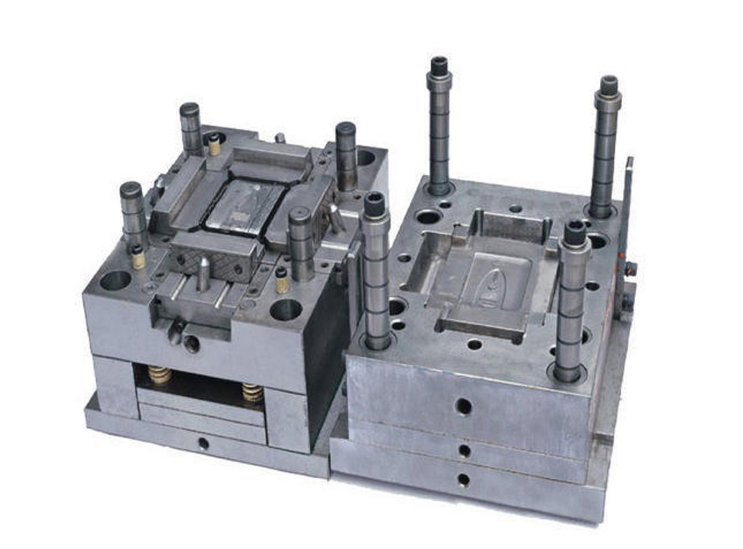
Prototyping Injection Molding
Opt for Kesu’s prototype molding services to receive fast, high-quality prototypes. With rapid lead times, a wide range of material options, and expert DFM support, we enable you to validate designs quickly and test functionality early in the process.
- Quantity: 1-100 pcs
- Lead Time: 1-3 weeks
- Soft tooling or 3D-printed mold used
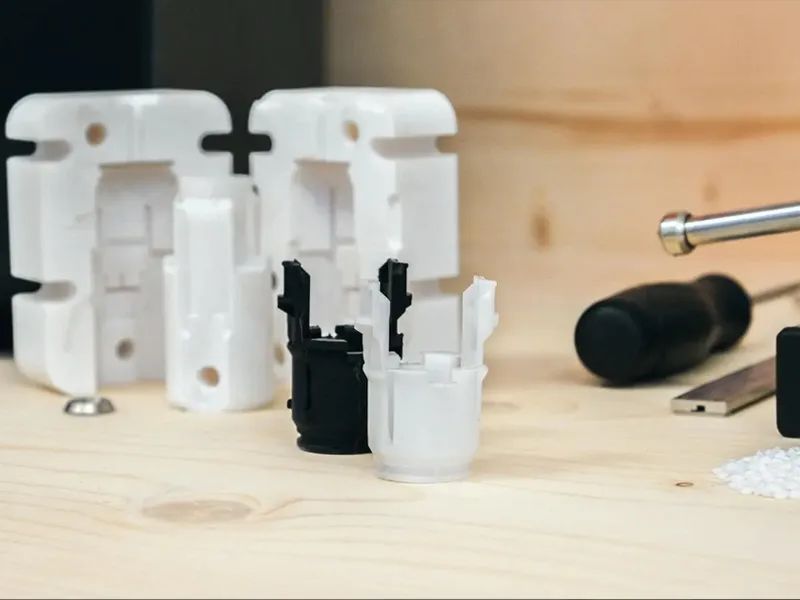
Low Volume Injection Molding
Kesu’s low-volume production using aluminum tooling offers fast, cost-effective manufacturing of intricate plastic parts in quantities ranging from hundreds to thousands. Perfect for design validation, inventory management, and a flexible supply chain that can adapt to changing demand.
- Quantity: 100-10,000 pcs
- Lead Time: 3-6 weeks
Mass Production
Kesu’s high-volume injection molding provides a fast, cost-effective solution for mass-producing precise, identical parts. Equipped with advanced machinery and stringent quality control, we guarantee tight tolerances and consistent quality across a wide range of plastic materials tailored to your needs.
- Quantity: Over 10,000 pcs, can go into the millions
- Lead Time: 4-12 weeks or more
- 100+ thermoplastic, thermoset materials available
What is Injection Molding?
Injection molding is a manufacturing process used to produce parts by injecting molten material, typically plastic, into a mold cavity under high pressure. The material then cools and solidifies, taking the shape of the mold. This process is highly efficient for producing large quantities of identical parts with intricate details and tight tolerances.
Injection molding is commonly used in industries such as automotive, consumer electronics, medical devices, and packaging due to its ability to handle complex shapes and diverse materials. It offers advantages such as high production speed, low material waste, and consistent quality across large production runs.
ADVANTAGES
Advantages of Injection Molding
Injection molding is a widely used manufacturing process due to its numerous benefits. Here are the key advantages:
- High Efficiency: Offers rapid production cycles, making it ideal for mass production with quick turnaround times.
- Precision and Consistency: Delivers tight tolerances and uniform quality, even for complex designs.
- Complex Geometries: Capable of producing intricate parts with features like undercuts, threads, and thin walls.
- Low Waste: Minimizes material waste, with leftover material often recyclable for future use.
- Cost-Effective for Large Runs: Significantly reduces per-unit costs for high-volume production, making it economical.
- Durable Parts: Produces components that can withstand mechanical stress, temperature variations, and chemical exposure, depending on material choice.
- Customizable Surface Finishes: Allows for direct texturing, polishing, painting, or plating after molding, reducing post-processing steps.
- Scalability: Adapts to different production needs, from small prototype runs to large-scale manufacturing.
- Automation-Friendly: Easily integrates with automation technologies to enhance productivity and reduce labor costs.
APPLICATIONS
Applications of Injection Molding
Injection Molding is highly versatile, allowing for the creation of both simple and complex parts with high precision and efficiency.
- Automotive Industry: Used to create durable and lightweight components such as dashboards, bumpers, and interior trims.
- Consumer Electronics: Produces casings, connectors, and precision parts for devices like smartphones and laptops.
- Medical Devices: Manufactures sterile, high-precision items like syringes, IV components, and prosthetics.
- Packaging: Creates lightweight, durable containers, caps, and closures for food and beverages.
- Aerospace: Fabricates complex, high-strength components for aircraft interiors and systems.
- Home Appliances: Builds parts for products such as washing machines, refrigerators, and vacuum cleaners.
- Toys and Recreation: Molds intricate and colorful parts for toys, games, and sports equipment.
- Construction: Produces components like fasteners, fittings, and insulation for building projects.
- Industrial Machinery: Makes precision parts like gears, housings, and seals for heavy equipment.
- Custom Prototyping: Enables the creation of unique, tailored parts for product development and testing.
Why Choose Kesu for Injection Molding?

Quality Assurance
Kesu employ rigorous quality control measures throughout the milling process, ensuring that each part meets or exceeds your expectations. Advanced inspection equipment further guarantees accuracy.

Competitive Pricing
Without sacrificing quality, Kesu offers competitive pricing for our custom services. We strive to provide cost-effective solutions, making advanced manufacturing accessible to businesses of all sizes.

Exceptional Customer Service
Kesu‘s dedicated customer support team is always ready to assist. From initial inquiries to project completion, we maintain open communication, ensuring a seamless and satisfying experience.
FAQs About Injection Molding
The four stages of injection molding are:
Injection: In this stage, plastic pellets are melted and injected into a mold cavity under high pressure. The material fills the mold to take the shape of the desired part.
Cooling: Once the mold is filled, the material begins to cool and solidify. This is the most crucial phase as the plastic must fully cool to maintain the part's shape and dimensions.
Ejection: After cooling, the mold opens, and the finished part is ejected from the mold cavity. Ejection mechanisms like pins or air blasts are used to remove the part without damaging it.
Post-processing: This stage involves any necessary finishing processes, such as trimming excess material (flash), polishing, painting, or assembling the parts, depending on the design requirements.
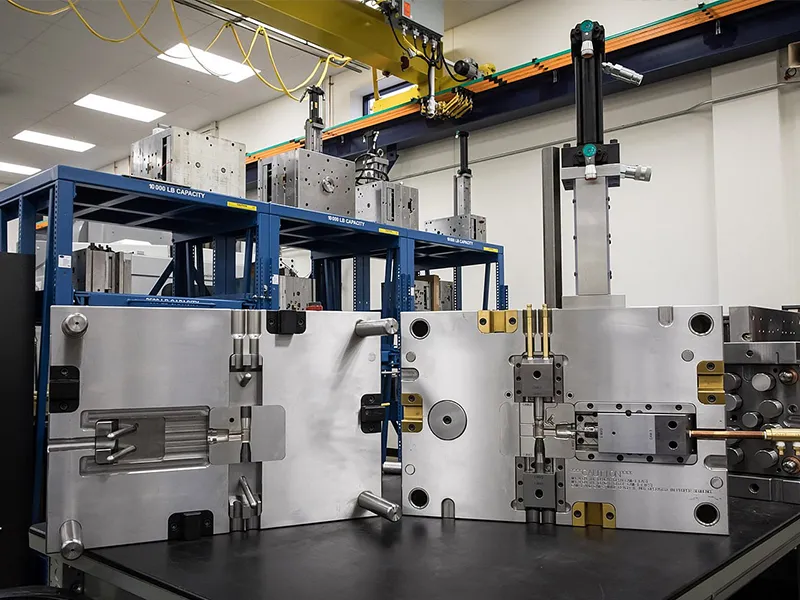
The process of injection mold making begins with the design and engineering of the part to be molded, using 3D CAD models. The mold base is then selected and prepared, typically from steel or aluminum. Next, the mold cavity is created through machining techniques like CNC or EDM, ensuring the shape of the final part. Cooling channels and an ejection system are integrated into the mold to regulate temperature and ensure easy removal of the part. After assembly, the mold undergoes testing and adjustments to ensure proper functionality, before moving on to full-scale production.
Typical tolerances for injection molded parts vary based on factors such as material, part size, and complexity. For small parts (less than 25mm), tolerances range from ±0.1mm to ±0.3mm, while medium-sized parts (25mm to 100mm) can have tolerances of ±0.2mm to ±0.5mm. Large parts (over 100mm) may have tolerances from ±0.5mm to ±1.0mm. Parts with complex features like threads or thin walls may require tighter tolerances, ranging from ±0.05mm to ±0.1mm. Material selection also affects tolerance, as different materials have varying shrinkage rates. In high-precision applications, tighter tolerances can be achieved with specialized techniques.
The minimum order quantity (MOQ) for injection molding typically depends on factors like part complexity, material, and production volume. For injection molding, the MOQ can range from as low as 100 to 500 pieces for smaller, simple parts. However, for larger or more complex parts, the MOQ may be higher to make the production run cost-effective. It's best to consult with the manufacturer to determine the specific MOQ for your project, as it can vary based on your needs and the injection molding process being used.
The cost of injection molding services is influenced by several factors, including part complexity, material choice, production volume, and mold design. Complex parts with intricate features, such as undercuts or threads, may increase costs, as well as the material selected for production. Larger production runs typically reduce the per-unit cost, while smaller batches might have a higher per-unit price due to setup fees. Additionally, custom mold designs and faster lead times can contribute to the overall cost. To get an accurate estimate, it’s best to provide your project details, such as design, material, and quantity, to the manufacturer for a tailored quote.
Yes, you can absolutely get prototype parts before committing to full-scale production. This is a common practice in manufacturing to ensure that the design is functional, meets specifications, and is free of potential issues before large quantities are produced. Prototypes can be created using rapid prototyping methods like 3D printing or low-volume injection molding, allowing you to test the design for form, fit, and function. Once the prototype meets your requirements, you can move forward with full-scale production.